

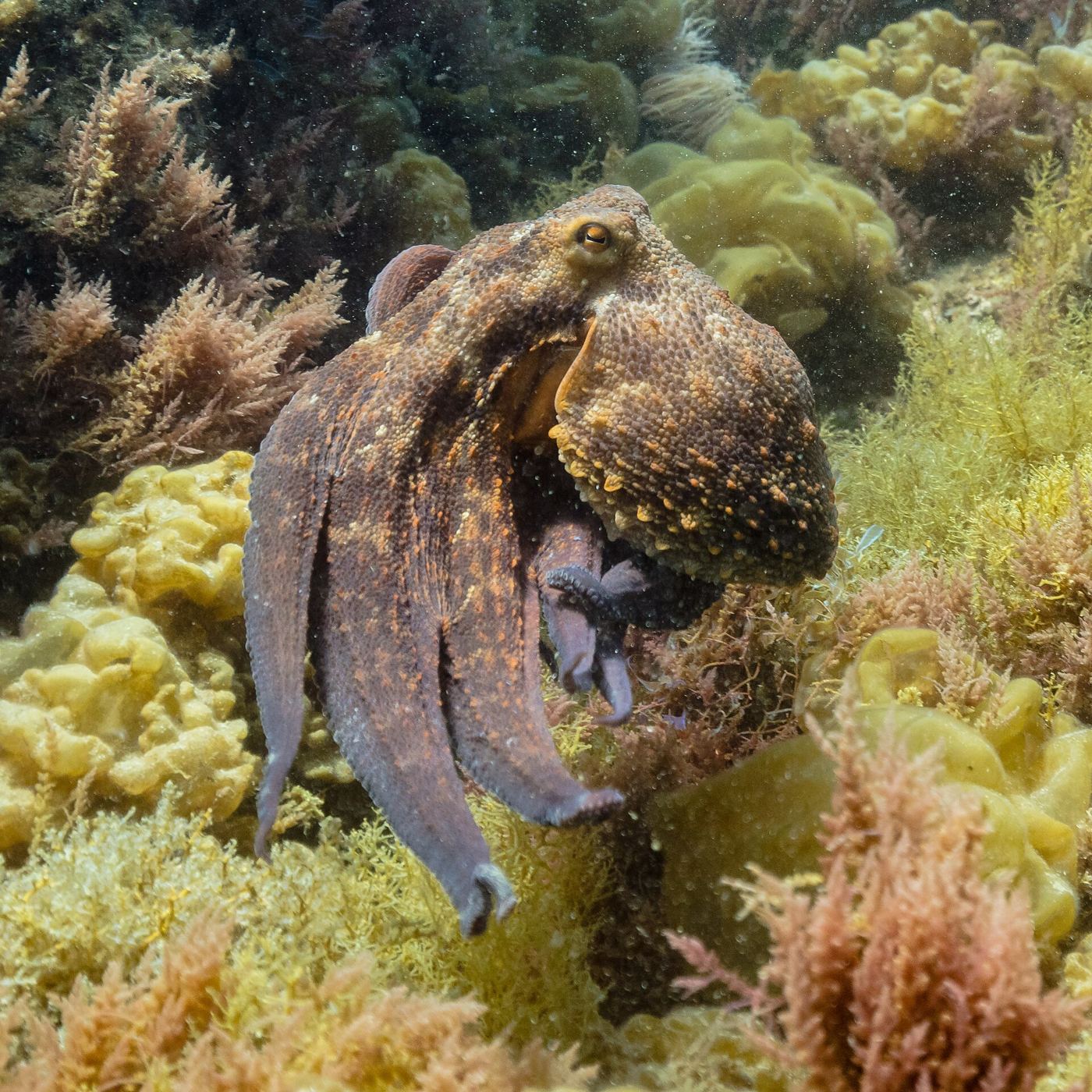
An octopus is one of the most surprising animals in the sea. With three hearts, blue blood and arms that can taste what they touch, it seems built from a different blueprint from almost every other creature. Its most famous talent is changing colour: tiny sacs of pigment in the skin expand and contract in less than a second, letting the animal match rock, sand or coral, or flash bold patterns to warn a rival. The same skin can raise bumps to match the texture of the seabed, so a resting octopus can vanish in plain sight. Octopuses also learn quickly. In laboratories they have unscrewed jar lids, solved mazes and remembered the answers days later, and in the wild they use shells and stones as tools and shelters. With no shell to protect them, they rely on brains and camouflage to survive among sharks and eels.
What the Evidence Shows
Researchers are still working out how much an octopus really understands. Each arm carries its own cluster of neurons and can act almost independently, tasting and exploring on its own while the central brain watches over the whole body. This distributed nervous system is unlike anything in a mammal, and it raises questions about how intelligence can evolve along a completely different path. Octopuses live fast and die young, most surviving only a year or two, yet they pack remarkable learning into that short life. Their camouflage has also inspired engineers, who are studying the skin’s colour-changing cells to build soft robots and materials that can blend into their surroundings. For marine biologists, every encounter with an octopus is a reminder that the sea still holds minds that work in ways we are only beginning to grasp. Reporting and analysis from sources such as National Science Foundation track the same developments, and specialists following the octopuses changing colour and solving puzzles say the direction is now consistent across independent lines of evidence.
The Wider Context
The wider context is a research landscape in which replication and open data now decide reputations. Findings connected to the octopuses changing colour and solving puzzles are being checked by independent groups with shared datasets, and the teams involved publish their methods in full so rivals can test every step. That discipline is slower than a headline cycle, but it is why results in this area increasingly survive first contact with scrutiny.
What Happens Next
What happens next in the story of the octopuses changing colour and solving puzzles will be decided by follow-up work already under way: larger samples, longer observation and instruments that have not yet come online. The researchers involved are unusually united on one point, that the current results justify the next investment of time and money. Readers will not have to wait long for the first tests of that claim. You can follow related developments in our coverage of science.
There is a practical lesson in all of this for readers deciding what to do today. Start with the verified facts, be wary of anyone promising certainty, and prefer reversible steps while the evidence is still developing. Circumstances differ by country, income and personal situation, so general guidance should always be weighed against your own context before you act on it in any significant or lasting way.
